Monday, August 22, 2016

Cut the Olympic Doom Crap Out, Media

The Olympic Games have once again come to a close. Rio passes the torch to Tokyo while Pyeongchang (no, not Pyongyang) prepares to welcome the Winter Olympics in 2018. We'll also probably hear soon which city will be awarded the 2024 Olympics.

There has been a trend with the Olympics lately which is bothersome and seems to only be getting worse. The media seems to be only too happy to relentlessly point out the negative aspects of what's going on in the host country or city.

It was not particularly visible in Vancouver, but Beijing, London, Sochi, and Rio all had serious doubts as to whether their hosting of the Games would run smoothly. The Athens Olympics are now looked back upon with frustration as Greece reels from economic catastrophe.

Now, the issues that surround the Olympics are not fabricated, they are very, very real. Rarely does the Olympics make a host city money, and the International Olympic Committee is an organization rife with corruption. London gambled by putting the Olympic Stadium in a relatively underdeveloped region of the city. Russia's anti-gay laws and questionable location choice (Sochi is a beach resort town, not a winter wonderland) were rightfully mocked and criticized. Rio and Brazil do struggle with corruption, poverty and crime, not to mention Brazil's economy falling off a cliff in the last few years. By contrast, the Brazilian economy was surging when Rio was awarded the Games.

But the show went on and Rio was able to put together a good show. The Opening Ceremony wasn't the amazing spectacle of Beijing, Sochi or London, but it went off without a hitch and the subdued nature of it is understandable considering how much less money Rio allocated for it. There were a few isolated incidents with crime, but nowhere near the disaster that was expected. Zika was a near non-issue as it is winter in Rio and the mosquitos which can carry Zika were not present as they would be in the summer. And these Olympics were full of wonderful sports stories just as previous Games were, with Neymar, Brazil's golden boy, smashing a penalty goal past the German keeper to give Brazil revenge for the 7-1 dismantling in the World Cup semifinal, Michael Phelps doing what he does best once again, Britain's surge into the top of the medal table, Usain Bolt effortlessly wowing the crowds with more golds on the track. Kosovo won their first medal ever. A refugee team marched into the Maracana to a standing ovation.

Furthermore, Rio is not some backwater village. It's a sprawling city that receives tons of tourists every year despite its problems. It had (has) the infrastructure to handle a large event such as the Olympics.

Perhaps some of it can be attributed to prejudice. Brazil, like many of its neighbors, has stereotypes that portray it as a lawless, crime-ridden land where everyone's looking to make a quick buck off any unsuspecting gringo tourist. This was less evident in Sochi and much, much less evident in London.

This media hysteria will likely continue, but look for it to move from the Olympics to the World Cup. South Korea and Japan, the next two hosts, will likely get less negative press when they host the Games as they're known as advanced and well-developed countries, but it could come back in 2022 when Beijing hosts the Winter Games, as most of the events will have to be many miles outside Beijing proper, not to mention how 2022 seemed to be the Olympics nobody wanted-by the time the IOC had to choose a city, only Beijing and Almaty, Kazakhstan remained in the running as every other bid had been withdrawn. The World Cup, however, has even bigger problems with Qatar and (to considerably less controversy) Russia hosting next.

It's fine to call out the problems that come along with the Olympics. There are real problems that come with hosting the Olympic Games, and they should be brought to light. Hysteria, however, is just obnoxious, and as we saw with Rio, largely unfounded when crunch time hits. Cut it out and let the host countries put on their shows.

Wednesday, August 17, 2016

How Populism Goes Out of Style

Populism is a political ideology that seeks to rally the people against a common enemy which, both on the left and right, is mistreating them.

Who is enabling the mistreatment of the people varies widely depending on who you ask. Wealthy citizens, established politicians, financial institutions, elites, immigrants, minorities, you name it, all can be smeared in a populist campaign.

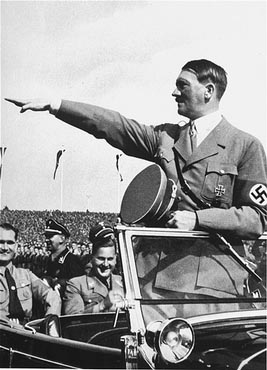
For those who aren't buying what populism is selling, the phenomenon can be very alienating and frightening. The rise of Donald Trump and Bernie Sanders in the United States and various ethnic nationalist parties in Europe who are gaining in polls across the continents are decried as a worrisome problem, a threat to liberty and democracy, and the first step towards violence and war, such as when Adolf Hitler rose to power in Germany.


Mark Twain said that "History doesn't repeat itself, but it sometimes rhymes." When fascism and communism rose to power in Europe, populism was a large part of each movement. Hitler, Mussolini, and Lenin all rose to power for similar reasons.

Post-war Germany was a dreary place. The economy was decimated by debt and reparations. The German Mark became so worthless that children would play with bundles of bills and their parents would burn the bills to keep warm. The flourishing national pride of Imperial Germany was replaced with frustration and depression. Similar problems plagued Italy between 1918 and 1922. Benito Mussolini, like Adolf Hitler, promised territorial expansion and a closer relation to the Catholic Church in his rise to power. And in Russia, Vladimir Lenin capitalized on a frustrated and disheveled population who did not want to fight in the First World War under the weak provisional government of Aleksandr Kerensky.


Few people in the United States saw real estate mogul Donald Trump rising so quickly to become the nominee of the Republican Party in this year's presidential election. But his brash and wildly politically incorrect rhetoric coupled with powerful nostalgia to "Make America Great Again!" made a frustrated Republican electorate flock to him.

Democrats were overjoyed to see their vivid idea of the obnoxious, intolerant Republican rise to dizzying highs in the polls, eyeing a sweeping victory in the general election. Nothing seemed able to stop Trump once the primary began, not the extensive experience heralded by candidates like Jeb Bush and John Kasich, not the religious right championed by Marco Rubio and Ted Cruz.


A similar, but smaller populist movement emerged in the Democratic Party as well when longtime Senator Bernie Sanders announced his candidacy for President. Sanders, a self-declared socialist on the American left's outpost, focused his campaign on income inequality, the corrupt practices in the American banking system and extravagant liberties taken by the richest Americans.

There are various reasons why Sanders was unable to capitalize on populist sentiment and Trump was able to, but the longtime Senator from Vermont certainly had an effect on the Democratic Party despite losing.

Neither Trump nor Sanders was expected to do as well as they did in the primary process, but these types of candidates don't just come out of nowhere. 

It's impossible to pinpoint exactly where and when populist sentiment started to play a substantial part in the American electoral process, but when examining the rise of Donald Trump in Republican Party, one could turn the clocks back to 2008 when then-Senator Barack Obama and Senator John McCain were fighting it out in the presidential election to suggest a starting point.

2008 was a largely frustrating year for Republicans. President George W. Bush was leaving office in the midst of two wars, a sharp economic recession, and approval ratings in the 20s. Even many Republicans had turned against his leadership. Senator McCain, the Republican nominee, was facing an uphill battle to win the presidential election because he was similar in approach and policy to President Bush and was seen as more of the same.

Senator McCain, in an attempt to rally the more conservative and religious-right factions of the party, chose Alaska firebrand Sarah Palin as his Vice Presidential nominee, a move that was widely criticized after the election as Palin's inexperience and policy weaknesses showed rather quickly once the press started to scrutinize and vet her. Yet many in the party still insisted she could bring home the bacon for their factions.

A darker undercurrent of prejudice was also lurking in the shadows. Senator Obama, the first major Black American running for president, faced a lot of questioning from members of the Republican Party as to whether he was a Christian American as he had claimed, or a Kenyan Muslim.

This came to the forefront when, at one of Senator McCain's campaign rallies, a middle-aged woman spoke directly to the Senator detailing how much she did not trust Senator Obama. McCain gives her an understanding nod, until the woman claims "He [Obama] is an Arab".

At that point, Senator McCain quickly took the microphone away from the woman and explained that Obama was not an Arab, but a "decent family man and citizen who I happen to have fundamental disagreements with on policy".

Rather than go the way of their presidential candidate, however, many Republicans continued to fan the flames on this issue until it boiled over about three years later, finally pushing President Obama to release his long-form birth certificate, which, as he had previously insisted, showed he was born in Honolulu, Hawaii. Anti-establishment sentiment championed by the Tea Party and similar groups, however, continued to increase as more personal attacks against Obama came forward.

By 2016, the anti-establishment sentiment came to a boiling point. At one point, polls showed Donald Trump, neurosurgeon Ben Carson, and former HP CEO Carly Fiorina at the top of the polls. None of these candidates had any substantial political experience, and yet they led the polls. It's true Carson and Fiorina eventually faded into obscurity, but Trump was able to stay in the driver's seat and coast to the Republican nomination.

As for the Democrats, Bernie Sanders also struck a nerve with frustrated Americans. His message on income inequality resonated with many Americans in states with economic problems and a lack of job opportunities. Sanders was not nearly as brash or politically incorrect as Trump and he did not go after Mexicans and Muslims like Trump did, but like Mr. Trump, he was quick to put the problems facing the United States of America were due to an outside force, in Sanders' case, banks, millionaires, and billionaires who did not pay enough in tax.

Sanders, however, was up against a much different figure. His opponent, Hillary Clinton, was able to beat him in the Democratic primary for various reasons. Her vast experience in different branches of the government (First Lady, Senator, Secretary of State) was a sharp contrast to Sanders' lack of concrete accomplishment in a long Senate career.  Her concrete and comprehensive foreign policy was a major blow to Sanders as Sanders seemed largely uninterested in foreign policy. Clinton also dominated with both Black Americans and Hispanic Americans, two key demographics the Democrats reach out to.

The biggest obstacle to Senator Sanders, however, was the general Democrat-voting public's feelings towards their establishment. Most Democrats and "liberals" in America were, and are, largely satisfied with the way things are. President Obama is substantially more popular as his second term winds down than Bush 43 was in 2008. Clinton's Vice Presidential pick, Senator Tim Kaine of Virginia, is wildly popular with Virginia Democrats and even some Republicans.

As the election draws closer it looks as if the establishment faction of the Democratic Party will crush the populist uprising in the GOP as Donald Trump continues to steer his campaign into trouble with clumsy, inflammatory remarks. Traditional swing states such as Ohio and Florida look to be safely in the hands of the Democrats and even some normally red states such as Arizona, Georgia, and Missouri may turn blue come November. Gaps are even narrowing in Texas, Mississippi, and Utah, states that 2012 Republican nominee Mitt Romney easily won.

That doesn't mean Sanders supporters and Trump supporters don't have legitimate grievances, however.  There are millions of people across the United States who are frustrated and maddened by politicians in Washington who they think have turned a blind eye to their plight. Sanders and Donald Trump both dominated in rural areas of the United States where opportunities, jobs, and upward mobility are scarce and government entities are widely mistrusted as too distant and concentrated on other areas. This is evident in the rust-belt and rural areas of upstate New York which are relatively ignored compared to New York City.  Southern Illinois is commonly overlooked in favor of Chicago. Western Massachusetts can often be an afterthought to Boston. 

Neither Sanders nor Trump may be the answer to the problems they promised to fix. And their ideas may even make things even worse. Left-wing populists in South America have largely failed to address the problems that they were elected to fix. But that doesn't mean the problems don't exist among their voters. Simply put, if the ideas that take hold in populist campaigns are addressed more comprehensively by "mainstream"or "establishment" politicians, anti-establishment sentiment may be kept at smaller levels. Would people have voted for Trump to "Make America Great Again" if they already believed America was great from their own backyards? Would they have voted for Sanders if there was a comprehensive effort to address income inequality previously?

A similar phenomenon in Europe is taking hold. The European Union's severely flawed handling of the refugee crisis has led to the rise of ethnic nationalist and even neo-Nazi parties in response. Austria, for instance, nearly voted in a presidential candidate from their Freedom Party, which has open historical links to the Nazi Party. The final vote tally had the FPO candidate losing by less than 1 percentage point.

Again, though, these parties don't come out of nowhere. They likely would have stayed on the fringe if there was a comprehensive plan to take in limited numbers of refugees and assimilate them into the European social fabric.

It's time for mainstream political voices to acknowledge populist sentiment to an extent. Their candidates may play to foul or wildly exaggerated sentiments, but these movements have legitimate grievances, and if those grievances are addressed and righted, populism loses steam.


Monday, June 6, 2016

The Ballad of Donnie and Vova

“I’ll be friends with Vladimir Putin. I just think so.”

Such were the words of Republican Party nominee and real estate mogul Donald J. Trump when asked how he would engage the United States’ old rival Russia. 

This was a stark contrast to most of the other candidates who ran in the primary elections on both sides of the American political spectrum. Senators Bernie Sanders and Rand Paul appealed to caution but condemnation of the Kremlin’s action. Former Secretary of State Hillary Clinton pledged to stay the course plotted by President Obama, and most other Republicans pledged to directly arm the Ukrainian Army in its still-not-quite-frozen conflict with pro-Kremlin separatists. Ohio Governor John Kasich even raised some eyebrows when he claimed that “we should punch the Russians in the nose”, a sharp contrast to his normally folksy “Aww shucks” Midwestern demeanor. 

Russian state media immediately jumped at the news when Mr. Trump claimed he and Putin would get along, and the Kremlin commended him for the overture. While Moscow did not venture to comment on American domestic political issues, it was more than happy to welcome a change from the icy relations between the two countries over the past few years. 

The honeymoon between Trump and Putin soured briefly when Trump’s campaign released an ad implying that Putin, and by extension, Russia, was America’s menacing, tough enemy by showing President Putin performing throws in his judo gi and laughing after a brief clip of Hillary Clinton barking like a dog at a campaign. The Kremlin did not seem amused by the campaign advertisement’s implications. 

But the ad did not seem to have lasting negative effects as Trump still is looked upon favorably by Russians including those working at the state media TV channels, and Putin’s strong-man style of rule remains popular with nationalists in both the United States and Europe. 

Press outlets seem largely amused by this unexpectedly chummy relationship between the mouthy real estate mogul and the Kremlin’s ex-KGB Commander in Chief. Social media users gleefully spread pictures around of a mural depicting Putin and Trump locking lips (not unlike that infamous picture of Leonid Brezhnev and Erich Honecker) near a restaurant in Vilnius, Lithuania. 

But is Putin who Trump supporters think he is? And in the event of Trump taking up residence at 1600 Pennsylvania Avenue this coming January, will relations between Russia and the United States become friendly and possibly even cooperative? 

Donald Trump’s political platform has been, save for a few exceptions, consistently inconsistent. 

Mr. Trump was a Democrat at the beginning of President Obama’s first term, and he spoke glowingly of the new President as he rode into Washington on a wave of momentum from his election victory in November. 

For reasons still unclear, though, Trump’s approval towards President Obama did not last. Between 2011 and 2012, conspiracy theories that President Obama was not born in the United States and lied about his personal religious beliefs bubbled up and boiled over again. Trump, who was mostly silent about these theories in 2008 as Obama was on the campaign trail, became very outspoken and rode the wave of controversy by rallying those who believed the President was a Kenyan Muslim rather than a Christian American. Trump started to flirt with throwing his hat into the ring as the 2012 presidential election kicked off, but ultimately decided against it. 

The controversy mostly dissipated when Obama released his long-form birth certificate which said he was born, as he had said many times before, in Honolulu, Hawaii. Trump, however, continued to doubt as he demanded other documents such as his college transcripts from Columbia University. He has consistently criticized President Obama during his second term in office and finally decided to run for president, igniting a monumental movement and throwing the Republican Party into an identity crisis. 

Part of the reason the United States has only two political parties is due to the fact that both the Republicans and Democrats are very much “big-tent” political parties, meaning that they both incorporate multiple different factions under one banner who may or may not decide to unite behind a candidate when election season rolls around. 


The Republican Party in the United States is home to many factions. If one wanted to, they could probably break the party down along different lines three, four, or even five different ways based on the various presidential candidates in 2016’s primary. Candidates like John Kasich, Jeb Bush, Chris Christie, and George Pataki campaigned on their ability to achieve success in states with strong Democratic bases and were considered, for better or for worse, “moderates”. Candidates like Ted Cruz, Rick Santorum, and Mike Huckabee played to the Christian Right which is more influential in Southern states. Rand Paul hoped to appeal to the more Libertarian Republicans with his cautious foreign policy and desire to relax penalties for the use of illegal drugs such as marijuana. 

And Trump? Trump proved himself to be the wild card in all this. Rather than appealing to the traditional “small government, Christian values, and lower taxes” platform of many Republicans, Trump opted to appeal to vague but powerful nostalgia for a bygone era with his slogan “Make America Great Again!”, took a hardline stance on the issue of illegal immigration by boldly proclaiming that he plans to build a wall across the US-Mexico border and that Mexico will be the ones to foot the bill (this did not go over well south of the border, as three different Mexican presidents scathingly fired back at him). He also promises to be tough on Islamic fundamentalist terrorism by instituting a “temporary” ban on Muslim immigration to the United States as well as fiery claims that he would take on China and other countries competing with the United States with protective “America First” economic policies. In doing this, Trump adopted a right-wing stance much more similar to European nationalist and populist parties rather than traditional American conservatism. 

So what does Vladimir Putin have to do with all of this? 

Vladimir Putin is considered by many in Europe’s nationalist parties to be an ideal leader. He’s considered a strong, bold leader who demonstrates a deep love for the country he leads and its culture. He’s considered to be someone who will not tolerate outside forces diluting that culture or national identity through fear or intimidation. Marine Le Pen of France’s National Front, Viktor Orban of Hungary’s Fidesz, Nigel Farage of the UK Independence Party, Vojislav Seselj of Serbia’s Radical Party, and various other political figures have demonstrated an admiration for Putin’s method of conducting business. If Putin or someone like him was in power, the problems America or Europe 
face, they claim would not be as severe or perhaps not even exist, they claim. 

Below the surface, however, things are not such a clear consensus between Trump and his supporters, the European nationalist bloc, and the Kremlin. Russia’s immigration policies are not as strict as Trump claims he wants the United States’ to be. Many migrants from Central Asia and the Caucasus come to Russia for job opportunities as Russian remains a lingua franca between former members of the USSR. 

Furthermore, Russia is not an ethnically homogenous country, nor has it ever been such. In the Russian language, there are two words that both translate to “Russian”, but their definitions are slightly different. There is Russkiy, which denotes people who are ethnically Russian, and there is Rossiskiy which denotes “a citizen of Russia”. These terms are not mutually exclusive, one can be both Russkiy and Rossiskiy, but there is an important distinction. The official name of the country most people call “Russia” is “Rossiskoi Federatsiy” or “Russian Federation”. The use of “Rossiskoi” rather than “Russkoi” implies that Russia is a home to all the peoples of Russia, be they ethnic Russians or not. 

Many of the ethnic minorities living in Russia and the immigrants who come to Russia are Muslims. Within Russia there are millions of Muslim Tatars, Bashkortostanis, Chechens, Dagestanis, and Ingush peoples. Likewise, Kazakhs, Uzbeks, Tajiks, and Kyrgyz peoples come to Russia for economic opportunities, all of whom are predominantly Muslim. Around 6.5 percent of Russia’s 150 million people are Muslims, a much higher number than that of the United States and higher than many European countries. This denotes a small but very important difference between the ideas Trump and many of Europe’s nationalists propose and that which is actually practiced in Putin’s Russia. 

Vladimir Putin is many things, but he’s no Islamophobe. Trump proposes extended surveillance at mosques and a temporary ban on Muslims who want to come to the United States? Vladimir Putin oversees and approves the construction of new mosques in Russia’s cities and has wished “Eid Moubarak!” to Russia’s Muslims after Ramadan came to a close. Is it true that many of these peoples are more secular than Muslims elsewhere? Perhaps, but that is much more a product of history (particularly seventy years of state-enforced secularism) than Putin’s policies. 

Is Putin a strong leader? Is he the strong leader that he is portrayed as? Suppose it depends on what your definition of “strong” is. Considering the current situation in Russia, though, that may be a somewhat difficult argument to make. The economy has slumped into a considerable recession. The rouble doesn’t buy what it used to. The conflict in Ukraine, regardless of whether you support the Kremlin’s actions or not, has become a stalemate with few tangible benefits. Russia is much more isolated and distrusted internationally. The Kremlin has been mostly mute on how it’s going to tackle economic woes. Things may not be a catastrophe now, but there are wounds festering below the surface in Russia and if current trends aren’t reversed, those wounds could become infected and spread to corrode still-healthy aspects. Rhetoric and pride can mobilize a people to do things previously considered impossible, but it doesn’t fill one’s wallet with a stable wage every few weeks by itself. 

Coming back stateside we may be seeing a similar horizon. Donald Trump’s plans to “Make America Great Again” lack substance in many ways. He never really specified how he would be friends with Putin...he’s never really specified much at all. Economists are very vocally wary of his protectionist policies. 


And yet his popularity still sits high and mighty. Whether he can turn that into a general election victory over Hillary Clinton is still yet to be written, but if he can’t, he may just prove the point that rhetoric can mobilize, but its ability to deliver tangible results is inconsistent at best.