Populism is a political ideology that seeks to rally the people against a common enemy which, both on the left and right, is mistreating them.
Who is enabling the mistreatment of the people varies widely depending on who you ask. Wealthy citizens, established politicians, financial institutions, elites, immigrants, minorities, you name it, all can be smeared in a populist campaign.
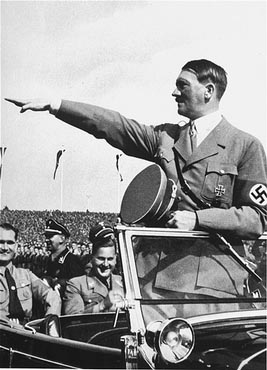
For those who aren't buying what populism is selling, the phenomenon can be very alienating and frightening. The rise of Donald Trump and Bernie Sanders in the United States and various ethnic nationalist parties in Europe who are gaining in polls across the continents are decried as a worrisome problem, a threat to liberty and democracy, and the first step towards violence and war, such as when Adolf Hitler rose to power in Germany.
Mark Twain said that "History doesn't repeat itself, but it sometimes rhymes." When fascism and communism rose to power in Europe, populism was a large part of each movement. Hitler, Mussolini, and Lenin all rose to power for similar reasons.
Post-war Germany was a dreary place. The economy was decimated by debt and reparations. The German Mark became so worthless that children would play with bundles of bills and their parents would burn the bills to keep warm. The flourishing national pride of Imperial Germany was replaced with frustration and depression. Similar problems plagued Italy between 1918 and 1922. Benito Mussolini, like Adolf Hitler, promised territorial expansion and a closer relation to the Catholic Church in his rise to power. And in Russia, Vladimir Lenin capitalized on a frustrated and disheveled population who did not want to fight in the First World War under the weak provisional government of Aleksandr Kerensky.


Few people in the United States saw real estate mogul Donald Trump rising so quickly to become the nominee of the Republican Party in this year's presidential election. But his brash and wildly politically incorrect rhetoric coupled with powerful nostalgia to "Make America Great Again!" made a frustrated Republican electorate flock to him.
Democrats were overjoyed to see their vivid idea of the obnoxious, intolerant Republican rise to dizzying highs in the polls, eyeing a sweeping victory in the general election. Nothing seemed able to stop Trump once the primary began, not the extensive experience heralded by candidates like Jeb Bush and John Kasich, not the religious right championed by Marco Rubio and Ted Cruz.
A similar, but smaller populist movement emerged in the Democratic Party as well when longtime Senator Bernie Sanders announced his candidacy for President. Sanders, a self-declared socialist on the American left's outpost, focused his campaign on income inequality, the corrupt practices in the American banking system and extravagant liberties taken by the richest Americans.
There are various reasons why Sanders was unable to capitalize on populist sentiment and Trump was able to, but the longtime Senator from Vermont certainly had an effect on the Democratic Party despite losing.
Neither Trump nor Sanders was expected to do as well as they did in the primary process, but these types of candidates don't just come out of nowhere.
It's impossible to pinpoint exactly where and when populist sentiment started to play a substantial part in the American electoral process, but when examining the rise of Donald Trump in Republican Party, one could turn the clocks back to 2008 when then-Senator Barack Obama and Senator John McCain were fighting it out in the presidential election to suggest a starting point.
2008 was a largely frustrating year for Republicans. President George W. Bush was leaving office in the midst of two wars, a sharp economic recession, and approval ratings in the 20s. Even many Republicans had turned against his leadership. Senator McCain, the Republican nominee, was facing an uphill battle to win the presidential election because he was similar in approach and policy to President Bush and was seen as more of the same.
Senator McCain, in an attempt to rally the more conservative and religious-right factions of the party, chose Alaska firebrand Sarah Palin as his Vice Presidential nominee, a move that was widely criticized after the election as Palin's inexperience and policy weaknesses showed rather quickly once the press started to scrutinize and vet her. Yet many in the party still insisted she could bring home the bacon for their factions.
A darker undercurrent of prejudice was also lurking in the shadows. Senator Obama, the first major Black American running for president, faced a lot of questioning from members of the Republican Party as to whether he was a Christian American as he had claimed, or a Kenyan Muslim.
This came to the forefront when, at one of Senator McCain's campaign rallies, a middle-aged woman spoke directly to the Senator detailing how much she did not trust Senator Obama. McCain gives her an understanding nod, until the woman claims "He [Obama] is an Arab".
At that point, Senator McCain quickly took the microphone away from the woman and explained that Obama was not an Arab, but a "decent family man and citizen who I happen to have fundamental disagreements with on policy".
Rather than go the way of their presidential candidate, however, many Republicans continued to fan the flames on this issue until it boiled over about three years later, finally pushing President Obama to release his long-form birth certificate, which, as he had previously insisted, showed he was born in Honolulu, Hawaii. Anti-establishment sentiment championed by the Tea Party and similar groups, however, continued to increase as more personal attacks against Obama came forward.
By 2016, the anti-establishment sentiment came to a boiling point. At one point, polls showed Donald Trump, neurosurgeon Ben Carson, and former HP CEO Carly Fiorina at the top of the polls. None of these candidates had any substantial political experience, and yet they led the polls. It's true Carson and Fiorina eventually faded into obscurity, but Trump was able to stay in the driver's seat and coast to the Republican nomination.
As for the Democrats, Bernie Sanders also struck a nerve with frustrated Americans. His message on income inequality resonated with many Americans in states with economic problems and a lack of job opportunities. Sanders was not nearly as brash or politically incorrect as Trump and he did not go after Mexicans and Muslims like Trump did, but like Mr. Trump, he was quick to put the problems facing the United States of America were due to an outside force, in Sanders' case, banks, millionaires, and billionaires who did not pay enough in tax.
Sanders, however, was up against a much different figure. His opponent, Hillary Clinton, was able to beat him in the Democratic primary for various reasons. Her vast experience in different branches of the government (First Lady, Senator, Secretary of State) was a sharp contrast to Sanders' lack of concrete accomplishment in a long Senate career. Her concrete and comprehensive foreign policy was a major blow to Sanders as Sanders seemed largely uninterested in foreign policy. Clinton also dominated with both Black Americans and Hispanic Americans, two key demographics the Democrats reach out to.
The biggest obstacle to Senator Sanders, however, was the general Democrat-voting public's feelings towards their establishment. Most Democrats and "liberals" in America were, and are, largely satisfied with the way things are. President Obama is substantially more popular as his second term winds down than Bush 43 was in 2008. Clinton's Vice Presidential pick, Senator Tim Kaine of Virginia, is wildly popular with Virginia Democrats and even some Republicans.
As the election draws closer it looks as if the establishment faction of the Democratic Party will crush the populist uprising in the GOP as Donald Trump continues to steer his campaign into trouble with clumsy, inflammatory remarks. Traditional swing states such as Ohio and Florida look to be safely in the hands of the Democrats and even some normally red states such as Arizona, Georgia, and Missouri may turn blue come November. Gaps are even narrowing in Texas, Mississippi, and Utah, states that 2012 Republican nominee Mitt Romney easily won.
That doesn't mean Sanders supporters and Trump supporters don't have legitimate grievances, however. There are millions of people across the United States who are frustrated and maddened by politicians in Washington who they think have turned a blind eye to their plight. Sanders and Donald Trump both dominated in rural areas of the United States where opportunities, jobs, and upward mobility are scarce and government entities are widely mistrusted as too distant and concentrated on other areas. This is evident in the rust-belt and rural areas of upstate New York which are relatively ignored compared to New York City. Southern Illinois is commonly overlooked in favor of Chicago. Western Massachusetts can often be an afterthought to Boston.
Neither Sanders nor Trump may be the answer to the problems they promised to fix. And their ideas may even make things even worse. Left-wing populists in South America have largely failed to address the problems that they were elected to fix. But that doesn't mean the problems don't exist among their voters. Simply put, if the ideas that take hold in populist campaigns are addressed more comprehensively by "mainstream"or "establishment" politicians, anti-establishment sentiment may be kept at smaller levels. Would people have voted for Trump to "Make America Great Again" if they already believed America was great from their own backyards? Would they have voted for Sanders if there was a comprehensive effort to address income inequality previously?
A similar phenomenon in Europe is taking hold. The European Union's severely flawed handling of the refugee crisis has led to the rise of ethnic nationalist and even neo-Nazi parties in response. Austria, for instance, nearly voted in a presidential candidate from their Freedom Party, which has open historical links to the Nazi Party. The final vote tally had the FPO candidate losing by less than 1 percentage point.
Again, though, these parties don't come out of nowhere. They likely would have stayed on the fringe if there was a comprehensive plan to take in limited numbers of refugees and assimilate them into the European social fabric.
It's time for mainstream political voices to acknowledge populist sentiment to an extent. Their candidates may play to foul or wildly exaggerated sentiments, but these movements have legitimate grievances, and if those grievances are addressed and righted, populism loses steam.
Who is enabling the mistreatment of the people varies widely depending on who you ask. Wealthy citizens, established politicians, financial institutions, elites, immigrants, minorities, you name it, all can be smeared in a populist campaign.
For those who aren't buying what populism is selling, the phenomenon can be very alienating and frightening. The rise of Donald Trump and Bernie Sanders in the United States and various ethnic nationalist parties in Europe who are gaining in polls across the continents are decried as a worrisome problem, a threat to liberty and democracy, and the first step towards violence and war, such as when Adolf Hitler rose to power in Germany.
Mark Twain said that "History doesn't repeat itself, but it sometimes rhymes." When fascism and communism rose to power in Europe, populism was a large part of each movement. Hitler, Mussolini, and Lenin all rose to power for similar reasons.
Post-war Germany was a dreary place. The economy was decimated by debt and reparations. The German Mark became so worthless that children would play with bundles of bills and their parents would burn the bills to keep warm. The flourishing national pride of Imperial Germany was replaced with frustration and depression. Similar problems plagued Italy between 1918 and 1922. Benito Mussolini, like Adolf Hitler, promised territorial expansion and a closer relation to the Catholic Church in his rise to power. And in Russia, Vladimir Lenin capitalized on a frustrated and disheveled population who did not want to fight in the First World War under the weak provisional government of Aleksandr Kerensky.


Few people in the United States saw real estate mogul Donald Trump rising so quickly to become the nominee of the Republican Party in this year's presidential election. But his brash and wildly politically incorrect rhetoric coupled with powerful nostalgia to "Make America Great Again!" made a frustrated Republican electorate flock to him.
Democrats were overjoyed to see their vivid idea of the obnoxious, intolerant Republican rise to dizzying highs in the polls, eyeing a sweeping victory in the general election. Nothing seemed able to stop Trump once the primary began, not the extensive experience heralded by candidates like Jeb Bush and John Kasich, not the religious right championed by Marco Rubio and Ted Cruz.
A similar, but smaller populist movement emerged in the Democratic Party as well when longtime Senator Bernie Sanders announced his candidacy for President. Sanders, a self-declared socialist on the American left's outpost, focused his campaign on income inequality, the corrupt practices in the American banking system and extravagant liberties taken by the richest Americans.
There are various reasons why Sanders was unable to capitalize on populist sentiment and Trump was able to, but the longtime Senator from Vermont certainly had an effect on the Democratic Party despite losing.
Neither Trump nor Sanders was expected to do as well as they did in the primary process, but these types of candidates don't just come out of nowhere.
It's impossible to pinpoint exactly where and when populist sentiment started to play a substantial part in the American electoral process, but when examining the rise of Donald Trump in Republican Party, one could turn the clocks back to 2008 when then-Senator Barack Obama and Senator John McCain were fighting it out in the presidential election to suggest a starting point.
2008 was a largely frustrating year for Republicans. President George W. Bush was leaving office in the midst of two wars, a sharp economic recession, and approval ratings in the 20s. Even many Republicans had turned against his leadership. Senator McCain, the Republican nominee, was facing an uphill battle to win the presidential election because he was similar in approach and policy to President Bush and was seen as more of the same.
Senator McCain, in an attempt to rally the more conservative and religious-right factions of the party, chose Alaska firebrand Sarah Palin as his Vice Presidential nominee, a move that was widely criticized after the election as Palin's inexperience and policy weaknesses showed rather quickly once the press started to scrutinize and vet her. Yet many in the party still insisted she could bring home the bacon for their factions.
A darker undercurrent of prejudice was also lurking in the shadows. Senator Obama, the first major Black American running for president, faced a lot of questioning from members of the Republican Party as to whether he was a Christian American as he had claimed, or a Kenyan Muslim.
This came to the forefront when, at one of Senator McCain's campaign rallies, a middle-aged woman spoke directly to the Senator detailing how much she did not trust Senator Obama. McCain gives her an understanding nod, until the woman claims "He [Obama] is an Arab".
At that point, Senator McCain quickly took the microphone away from the woman and explained that Obama was not an Arab, but a "decent family man and citizen who I happen to have fundamental disagreements with on policy".
Rather than go the way of their presidential candidate, however, many Republicans continued to fan the flames on this issue until it boiled over about three years later, finally pushing President Obama to release his long-form birth certificate, which, as he had previously insisted, showed he was born in Honolulu, Hawaii. Anti-establishment sentiment championed by the Tea Party and similar groups, however, continued to increase as more personal attacks against Obama came forward.
By 2016, the anti-establishment sentiment came to a boiling point. At one point, polls showed Donald Trump, neurosurgeon Ben Carson, and former HP CEO Carly Fiorina at the top of the polls. None of these candidates had any substantial political experience, and yet they led the polls. It's true Carson and Fiorina eventually faded into obscurity, but Trump was able to stay in the driver's seat and coast to the Republican nomination.
As for the Democrats, Bernie Sanders also struck a nerve with frustrated Americans. His message on income inequality resonated with many Americans in states with economic problems and a lack of job opportunities. Sanders was not nearly as brash or politically incorrect as Trump and he did not go after Mexicans and Muslims like Trump did, but like Mr. Trump, he was quick to put the problems facing the United States of America were due to an outside force, in Sanders' case, banks, millionaires, and billionaires who did not pay enough in tax.
Sanders, however, was up against a much different figure. His opponent, Hillary Clinton, was able to beat him in the Democratic primary for various reasons. Her vast experience in different branches of the government (First Lady, Senator, Secretary of State) was a sharp contrast to Sanders' lack of concrete accomplishment in a long Senate career. Her concrete and comprehensive foreign policy was a major blow to Sanders as Sanders seemed largely uninterested in foreign policy. Clinton also dominated with both Black Americans and Hispanic Americans, two key demographics the Democrats reach out to.
The biggest obstacle to Senator Sanders, however, was the general Democrat-voting public's feelings towards their establishment. Most Democrats and "liberals" in America were, and are, largely satisfied with the way things are. President Obama is substantially more popular as his second term winds down than Bush 43 was in 2008. Clinton's Vice Presidential pick, Senator Tim Kaine of Virginia, is wildly popular with Virginia Democrats and even some Republicans.
As the election draws closer it looks as if the establishment faction of the Democratic Party will crush the populist uprising in the GOP as Donald Trump continues to steer his campaign into trouble with clumsy, inflammatory remarks. Traditional swing states such as Ohio and Florida look to be safely in the hands of the Democrats and even some normally red states such as Arizona, Georgia, and Missouri may turn blue come November. Gaps are even narrowing in Texas, Mississippi, and Utah, states that 2012 Republican nominee Mitt Romney easily won.
That doesn't mean Sanders supporters and Trump supporters don't have legitimate grievances, however. There are millions of people across the United States who are frustrated and maddened by politicians in Washington who they think have turned a blind eye to their plight. Sanders and Donald Trump both dominated in rural areas of the United States where opportunities, jobs, and upward mobility are scarce and government entities are widely mistrusted as too distant and concentrated on other areas. This is evident in the rust-belt and rural areas of upstate New York which are relatively ignored compared to New York City. Southern Illinois is commonly overlooked in favor of Chicago. Western Massachusetts can often be an afterthought to Boston.
Neither Sanders nor Trump may be the answer to the problems they promised to fix. And their ideas may even make things even worse. Left-wing populists in South America have largely failed to address the problems that they were elected to fix. But that doesn't mean the problems don't exist among their voters. Simply put, if the ideas that take hold in populist campaigns are addressed more comprehensively by "mainstream"or "establishment" politicians, anti-establishment sentiment may be kept at smaller levels. Would people have voted for Trump to "Make America Great Again" if they already believed America was great from their own backyards? Would they have voted for Sanders if there was a comprehensive effort to address income inequality previously?
A similar phenomenon in Europe is taking hold. The European Union's severely flawed handling of the refugee crisis has led to the rise of ethnic nationalist and even neo-Nazi parties in response. Austria, for instance, nearly voted in a presidential candidate from their Freedom Party, which has open historical links to the Nazi Party. The final vote tally had the FPO candidate losing by less than 1 percentage point.
Again, though, these parties don't come out of nowhere. They likely would have stayed on the fringe if there was a comprehensive plan to take in limited numbers of refugees and assimilate them into the European social fabric.
It's time for mainstream political voices to acknowledge populist sentiment to an extent. Their candidates may play to foul or wildly exaggerated sentiments, but these movements have legitimate grievances, and if those grievances are addressed and righted, populism loses steam.
