Thursday, March 7, 2019

Jeremy Corbyn and Ilhan Omar: Prejudice, Miscommunication, or Ignorance?


Left-leaning parties in the United States and United Kingdom have recently seen controversy over remarks made by representatives that some deem Antisemitic.

In the United States, Congresswoman Ilhan Omar of Minnesota's 5th Congressional District has made numerous remarks which have raised alarm among Jewish Americans which have caused the Democratic party to wrangle with two questions.

Were Congresswoman Omar's remarks antisemitic? And how should they be addressed?

In the United Kingdom, a similar controversy refuses to go away, but rather than stemming from a newly elected representative, the controversy comes from the top, centered upon the Leader of the Opposition and the Labour Party, Jeremy Corbyn. The Labour Party has seen 8 of its Members of Parliament resign from the party in recent weeks, many citing the party's "institutional anti-semitism" as one of their reasons for leaving.

What caused this controversy in the first place? Let's start in the United States.

Ilhan Omar, official portrait, 116th Congress.jpgCongresswoman Ilhan Omar is a naturalized citizen, a Somali-American, Muslim refugee who represents Minnesota's 5th Congressional district, which covers parts of Minneapolis and its suburbs. It was the seat once held by former Congressman and current Minnesota Attorney General Keith Ellison, who was first elected to the seat in 2006.

Congresswoman Omar has made three comments that have invited controversy.

The first was a tweet she made on November 16, 2012, which read as follows:
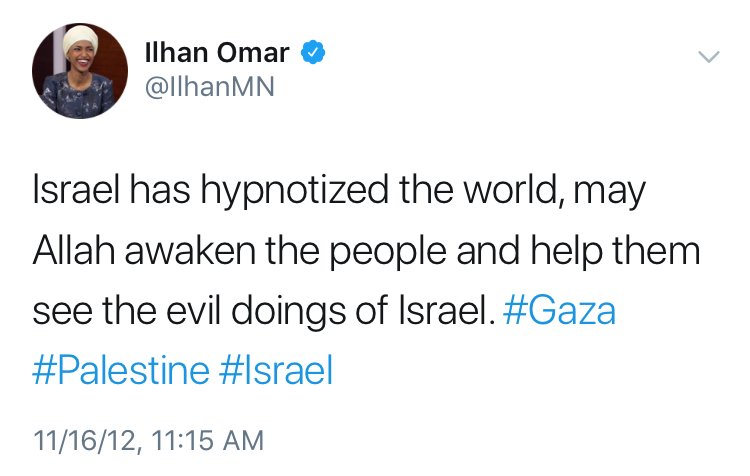
Image result for Ilhan Omar "Israel has hypnotized the world" tweet

This tweet came into the spotlight as Omar was elected to the House of Representatives in November 2018. It was widely criticized as alluding to the old antisemitic stereotype and conspiracy theory that Jews have a disproportionate, secretive and even malicious influence over world affairs. While the tweet does not explicitly mention Jews, it does mention Israel, a country which defines itself as a "Jewish and democratic state".

Omar initially defended her 2012 tweet,  claiming that "I don’t know how my comments would be offensive to Jewish Americans. My comments precisely are addressing what was happening during the Gaza War and I’m clearly speaking about the way the Israeli regime was conducting itself in that war."

However, she later backpedaled after her comments were criticized by New York Times columnist Bari Weiss, apologizing for "not disavowing the anti-Semitic trope I unknowingly used".

The second comment Congresswoman Omar made references a Puff Daddy song. Omar was criticizing the influence of the American Israel Public Affairs Committee, claiming in a roundabout way that money was the chief motivator behind American support of Israel. She referenced the song "It's all about the Benjamins" ("Benjamins" refers to US $100 bills, which depict Benjamin Franklin)

Again she was criticized, this time for skirting the stereotype that a predominantly Jewish group was buying off Americans in exchange for supporting Israel. She apologized relatively quickly, saying " "I am grateful for Jewish allies and colleagues who are educating me on the painful history of anti-Semitic tropes...I reaffirm the problematic role of lobbyists in our politics, whether it be AIPAC, the NRA or the fossil fuel industry"

Recently, Congresswoman Omar made a third comment that caused alarm. While speaking at a bookstore, Omar claimed that "I want to talk about the political influence in this country that says it is OK for people to push for allegiance to a foreign country."Again, a reference to Israel, and again, a remark which some claim skirts antisemitism by suggesting Jewish Americans are loyal to Israel, not the United States. Omar has not yet apologized for this statement.

The Democratic Party passed a resolution after Omar's "Benjamins" tweet condemning antisemitism and may do so again. However, some in the party have rallied to Omar's side, pointing out that criticism of Israel is not necessarily antisemitic and that Islamophobia has motivated some of the criticism against her.

Over in the UK, the Labour Party is run by a man named Jeremy Corbyn, a member of Parliament from Islington North, a constituency in London.
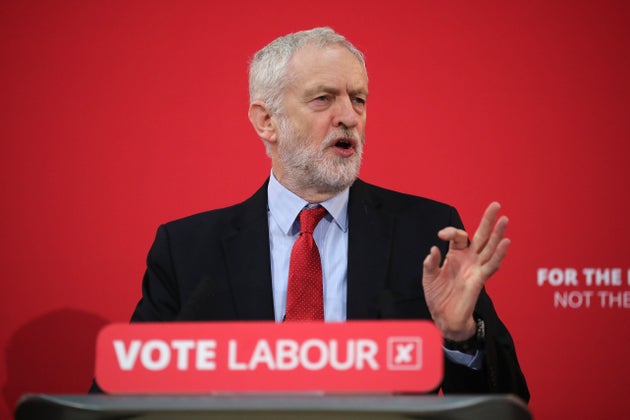
Image result for jeremy corbyn
Corbyn's political career has spanned for much longer than Congresswoman Omar's. He was first elected to the House of Commons under Labour's banner in 1983, and has been in Parliament since. He became leader of the Labour Party after the 2015 resignation of its former leader, Ed Milliband, in 2015.

His allegations of antisemitism are also longer and more illustrious than Omar's.

In 2010, Corbyn co-chaired a meeting in the House of Commons where a Holocaust survivor and Anti-Zionist political activist named Hajo Meyer spoke. Meyer compared Israel's actions to the Nazis and claimed that "Judaism in Israel has been substituted by the Holocaust religion, whose high priest is Elie Wiesel." Corbyn defended his attendance at the meeting by saying "Views were expressed at the meeting which I do not accept or condone. In the past, in pursuit of justice for the Palestinian people and peace in Israel/Palestine, I have on occasion appeared on platforms with people whose views I completely reject. I apologise for the concerns and anxiety that this has caused”.

In 2011, Corbyn was one of several MPs, mostly from the Labour Party, to sign a proposed motion to rename "Holocaust Memorial Day" to "Genocide Memorial Day". Karen Pollock, chief executive of the Holocaust Educational Trust said that "Any attempt to remove that specificity is a form of denial and distortion." The Labour Party responded, saying "this was a cross-party initiative, jointly sponsored by a senior Conservative MP, to emphasize the already broader character of Holocaust Memorial Day. It is not our policy to seek a name change for this important commemoration".

In 2012, a mural was painted in East London by an American artist named "Mear One" entitled "Freedom for Humanity". The mural strikes a conspiratorial tone and skirts the antisemitic trope of Jewish bankers having control over the world. The mural was removed, and Corbyn made a comment on facebook complimenting the artist. This provoked more complaints, and Corbyn apologized, claiming that once he took a closer look at the mural, he saw the antisemitism depicted.

Corbyn also attended a wreath-laying event in 2014 where the Palestinian victims of a widely-condemned Israeli airstrike  in 1985 were remembered. Close to where he attended the ceremony (he did not actually place a wreath, he was simply in attendance) were the graves of two people accused of involvement with the Black September group, which massacred members of the Israeli Olympic Team during the Olympic Games in Munich.


He also attended a Passover Seder with a Jewish group recently, which would theoretically combat the accusations of antisemitism, if it wasn't organized by a far-left group which agrees that the allegations of antisemitism against Corbyn were a political plot against him. Regarding Israel, the "Jewdas" group claims the country is a "a steaming pile of sewage which needs to be properly disposed of".

The sad part is that Congresswoman Omar is no stranger to religion based prejudice. Recently, "Assassinate Ilhan Omar" was found scrawled in a gas station bathroom in her Congressional district. An outrageous mural was hung in West Virginia's State Capitol building erroneously linking Omar to the attacks on September 11th, a clear reference to her being a Muslim. She has in the past recalled Islamophobic abuse that has been hurled at her as a girl growing up as she regularly wears a hijab.

Supporters of Corbyn and Omar repeat popular refrains, which, while not necessarily false, sometimes lack context.

One of the loudest refrains is that of "Criticism of Israel is not antisemitic!"

They're right. Criticizing Israel is not necessarily antisemitic. There are plenty of criticisms one can make of Israel's political decisions under Prime Minister Benjamin "Bibi" Netanyahu without being antisemitic.

Omar's criticisms, however, in addition to being controversial, also seem somewhat poorly thought out. If she's making them out of genuine concern about the Israel-Palestine conflict, that's fine, but this is an incredibly sensitive topic and while plenty of reasonable criticism exists, there are lines that Omar should be careful not to tread upon.

An example of criticism of Israel which is NOT antisemitic could look something like this:

“Israel should freeze settlement construction immediately and get back to the peace negotiating table. The conflict with Palestine has gone on for far too long and both countries are going to need to make some concessions and admit some fault if they are to acheive a long-lasting peace."

Let's examine the "Benjamins" quip. "It's all about the Benjamins, baby" is a reference to US$100 bills, and it's not unusual for politicians to complain about the influence of money in democracy, especially self-proclaimed democratic socialists. Perhaps Omar was trying to be clever by referencing Puff Daddy lyrics. Jokes about money, wealth, and financial stinginess are a touchy subject and one of the oldest stereotypes in the book about Jews.

For instance, had she made that sort of joke about the two front-runners in the upcoming Israeli election, who are both named Benjamin (Benjamin Netanyahu and Benjamin "Benny" Gantz), this may have been seen as a clever, funny remark.

And the other side of the political spectrum is not at all immune from this same perceived prejudice. Antisemitism is not just present but rampant among the rise of the nationalist right. Hungarian Prime Minister Viktor Orban can't seem to go two sentences without babbling about George Soros. The Alternative For Germany party constantly sticks its foot in its mouth while referring back to World War II and the Holocaust. The geriatric former leader of France's National Rally (formerly the National Front) party is still around and he's a Holocaust denier. President Trump once claimed that a white supremacist rally where they chanted "Jews will not replace us" had some "very fine people" and once said that "The only kind of people I want counting my money are short guys that wear yarmulkes every day. Those are the kind of people I want counting my money. No one else.”

I don't know if Ilhan Omar is antisemitic. I've never met her, I have never been able to sit down and talk to her.

Her remarks, however, are at best insensitive and ignorant to the context of antisemitism. If she doesn't want to be accused of antisemitism, she needs to choose her words more carefully. If she continues to make remarks in the fashion she is doing so now, she is not going to help her own cause.

As for Corbyn, the overwhelming feeling I get from reading about him, his past actions and his relationship with British Jews is above all, indifference. His apologies are present, but flimsy. He doesn't seem to properly vet the demonstrations he plans to attend in context of the wreath-laying. And right as you'd think he may have made an important step to reach out to the community he has such strained relations with by partaking in one of their most important and sacred holidays...he goes to an event which demonstrates open contempt - not criticism, but contempt and maybe even hatred - for Israel. Above all, whether he's antisemitic or not, I don't think he cares whether he's accused of it or not. And now he's losing members of his own party.


Thursday, January 17, 2019

A Brief Guide to the upcoming 2019 Israeli Election

Israelis will be heading to the polls on April 9th to elect the 21st Knesset.

Since the election was called, Israel's already large number of parties has grown. In order to get seats in the Knesset, a political party must gain at least 3.25% of the vote. This electoral procedure ensures that a wide range of political parties are able to win seats and make their voices heard.

Image result for Likud partyIsraeli political parties can be sorted by religion, ideology, and ethnicity. Here's who to watch for this election.


LIKUD

Likud is a center-right to right-wing political party, led by current Prime Minister Benjamin Netanyahu. It is a secular Jewish political party home to moderate and right-wing factions, but has managed to win elections in 2013 and 2015. It currently leads the polls for the 2019 election, hovering just under 30 seats in polling predictions. Prime Minister Netanyahu has wavered in his support for a Palestinian state, at times believing that there should not be one, other times claiming he supports one.

Benjamin Netanyahu is currently on track to return to the Prime Minister's residence in April if polls are accurate, but he's not guaranteed. The Prime Minister is under multiple corruption investigations, and both the police and the State Prosecutor have recommended that Netanyahu should be indicted. It is up to Israeli Attorney General Avichai Mandelbilt as to whether "Bibi" should be indicted. Netanyahu has claimed that he will not resign if indicted, but Israel has dealt with this sort of thing in recent memory. The Prime Minister before Netanyahu, Ehud Olmert, was indicted for corruption charges and he stepped down before the 2009 election, eventually serving time in prison.

Likud is the largest of the secular right-leaning parties in Israel. But if Netanyahu is indicted, its poll numbers may suffer and it could lose its solid grip on first place. If an indictment does get filed by the Attorney General, it is likely to come in February or March.

So who stands to gain most from this possibility?
YESH ATID Image result for yesh atid

Yesh Atid (English: "There is a Future") is a centrist, liberal political party led by former journalist Yair Lapid. Rather than focus on security issues, Yesh Atid is a party that prefers to shift the political dialogue to the economy and social issues such as conscription, corruption, civil marriage and the like. Although Lapid's party entered into a coalition government with Netanyahu and Likud after the 2013 election, it was increasingly critical of Likud leading up to the 2015 elections. Yesh Atid's security ideals are less hawkish than Likud, but definitely to the right of parties like the social democratic Meretz.

Many opinion polls put Yesh Atid second in the running for Knesset seats, even slightly above Likud at times, but their numbers have dwindled as the election draws closer. Lapid sometimes comes across as wishy-washy and indecisive. How well Lapid can unite the center and appeal to voters on the fence is up in the air, but if Netanyahu is indicted, he and his party stand to gain.

However, they're not the only party aiming to capture the center of Israeli voters.

RESILIENCE

The Israel Resilience Party is a wild card. It is one of the newer political parties and its positions are not yet very clearly defined. The only concrete political position Gantz has taken lately is a desire to reform Israel's controversial "nation-state" law with respect to Israel's Druze population.

It is led by Benny Gantz, a popular former General in the Israeli Defense Forces.

Gantz's party is set to receive around 12-14 seats if polls are to be believed, close to where Yesh Atid stands in the polls.

Lapid and Gantz has reportedly considered an alliance, but nothing has come to fruition quite yet as both want to run for the Knesset at the top of their party lists. If the parties did join, they'd come within striking distance of Likud in the polls. Theoretically, with Gantz's military experience and Lapid's stature in the Knesset, perhaps Lapid could run for Prime Minister and Gantz could be given the Minister of Defense job, though no such agreement has been made.


Logo haAwoda.svgZIONIST UNION...OR NOT

Hatnuah logo.svg
In the weeks leading up to the 2015 election, the social-democratic Israeli Labor Party and the liberal Hatnuah ("The Movement") party joined under one banner, calling themselves the Zionist Union in hopes that the alliance would gain just enough votes to unseat Prime Minister Netanyahu.

They fell short, winning 24 seats compared to Likud's 30. The parties stayed united until the very beginning of 2019, when they abruptly broke into their separate factions.

The Labor Party isn't the force it used to be. It won a respectable 19 seats in the last election, but since its split with Hatnuah, is only expected to win about 7-10 seats. Hatnuah may not even get into the Knesset if polls are to be believed. Both Labor's current leader, Avi Gabbay, and its co-leader when it was part of Zionist Union, Tziporah "Tzipi" Livni, used to be members of Likud. Some left-leaning Israelis are disappointed that the party has drifted away from its social-democratic roots, and the party hasn't been able to gain back its previous mandates on the basis of security policy since the failure of the Oslo Accords.

SUPPORTING ACTORS: THE (MOSTLY) SECULAR RIGHT

Four small political parties make up Israel's secular center-right to right-wing outside of Likud, two of which are brand new.


KulanuNew.svg


KULANU

Kulanu is a center to center-right party founded in 2014 by current Minister of Finance Moshe Kahlon. It won a respectable 10 seats in the Knesset in the 2015 elections, and is hovering around 5-7 seats in recent polls. Whereas Likud focuses on security issues, Kulanu focuses more on economic issues, such as the cost of living.


Yisrael Beiteinu party logoYISRAEL BEITEINU

Yisrael Beiteinu ("Israel Our Home") is a minor right-wing nationalist secular party that primarily represents the interests of Russian-speaking Israelis. It ran on a combined list with Likud in the 2013 election. 


GESHER

Gesher split off from Yisrael Beiteinu when MK Orly Levy left the party in 2016. Levy chose to resurrect the name of her father's party ("Gesher" means "Bridge" in Hebrew), which broke off of Likud in the 1990s. Levy's decision to split off from Yisrael Beiteinu was primarily driven by her frustrations with the party's lack of attention to social issues. Her new party is polling around 4-5 seats, just above the threshold.

Logo of HaYamin HeHadash.pngNEW RIGHT

New Right is a political party that seeks to bridge the divide between Orthodox Jewish voters and Secular Jewish voters under a far-right mantle. The party is led by Naftali Bennett and Ayelet Shaked, former members of the Jewish Home party. Bennett is a Modern Orthodox Jew, Shaked is secular. Their new party is a vocal proponent of a one-state solution.

SWINGING BACK LEFT: MERETZMeretz Logo.svg

Other than Labor and perhaps HaTnuah, Meretz is the only other Jewish party in the Knesset that could be considered a left-wing party. Meretz (Hebrew for "Vigor") is a social-democratic party focused more on social issues than Labor, which tends to focus on the economy and security issues.

Like Labor, Meretz was a stronger political player in the past and has faded in the present.

THE RELIGIOUS PARTIES

Jewish political parties in Israel can be separated into two camps: secular and religious. This label is a bit wonky as "secular" in this case usually means "not Orthodox".

There are three major Orthodox political parties in Israel. These parties do not typically win many seats in the Knesset, but with Israel's wealth of political parties and low election threshold (3.25%), they tend to become very important and influential when coalitions are built.

Within this group of parties, you have two Haredi parties and one Modern Orthodox party.

The Haredi parties are called Shas and United Torah Judaism, a coalition of two smaller parties called Agudat Yisrael (Union of Israel) and Degel HaTorah (Flag of the Torah).

Shas represents Mizrahi Jews, who trace their heritage to the Middle East, and Sephardic Jews, who trace their heritage to the Iberian Peninsula)

United Torah Judaism represents Ashkenazi Jews, those who trace their heritage to Western and Central Europe.

There exists some schism between secular (not Orthodox) Jews and Orthodox Jews in Israel. Under current Israeli law, civil marriage is not possible and non-Orthodox Jews must marry in an Orthodox ceremony, causing many secular Jews to marry abroad, as Israel does recognize secular marriages conducted abroad. Many of the secular parties seek to change this but Haredi parties want to uphold the status quo.

Haredi Jews also for the most part refuse to serve in the IDF as it would obstruct their religious studies, whereas the majority of secular Jews are conscripted.

The Modern Orthodox party is known as The Jewish Home, but their influence has waned since Naftali Bennett and Ayelet Shaked defected to their New Right party and the party is now barely treading water above the electoral threshold.


THE ARAB PARTIES

About 20% of Israeli citizens are Arabs. Their political representation in 2015's election was fairly significant, as the three major Arab parties combined their resources and ran as one party called the Joint List. The Joint List came in a respectable third place, only behind Likud and Zionist Union.

This big-tent coalition was made up of four parties of extremely variable ideology: Hadash, the largest faction, is a Communist party. Following them into the Knesset in 2015 are Balad, a left-wing, secular Arab nationalist party, Ra'am, who are Islamist, and Ta'al, another secular party.  

Recently, Ta'al split off from the Joint List, preferring to run on its own. It's still unclear how many seats Ta'al will manage to siphon off the still-mostly-united Joint List.


WHO'S GOING TO WIN? 

The short answer is that it's too early to tell. Right now, Likud still has a strong lead in the polls. Most polls conducted in January have Likud winning around 27-30 seats out of a total of 120. If the polls hold and Likud wins, they will have to work out a coalition with multiple other parties to create a government with 61 or more seats.

Before elections were called for April 2019, it briefly looked like Yesh Atid might be able to unseat Likud as they led multiple polls in 2017 and early 2018, but they were unable to hold that lead.

Likud's not out of the woods yet, though. Prime Minister Netanyahu is under multiple corruption allegations. Israeli police and more specifically, Economic Crimes Division Director Liat Ben-Ari have recommended to the Israeli Attorney General that he be indicted on three different cases.

If the Attorney General chooses to indict Netanyahu, his decision will likely come in either February or March.  Netanyahu has stubbornly refused to step down if he is indicted, but his party may suffer in the polls if he refuses, possibly forcing his hand.

This is not the first time an Israeli Prime Minister is under investigation as the elections draw closer. Netanyahu's predecessor, Ehud Olmert of the centrist Kadima party, was under investigation, and ended up serving time in prison. Olmert stepped down from power and was replaced by Tzipi Livni. Kadima still narrowly won the election, but Livni wasn't able to form a coalition, and that responsibility was given to Netanyahu because his Likud party had come in second.


Friday, January 11, 2019

BDS: Because Severely Flawed Activism is still protected Free Speech

Various states in the United States have been looking into passing legislation to fight against the Boycott, Divestment, and Sanctions movement. The moves have generated considerable debate from both pro-Israel and pro-Palestine movements. This debate has also involved constitutional scholars as to whether restrictions on BDS would constitute a violation of the First Amendment of the U.S. Constitution, which states that "Congress shall make no law...abridging the freedom of speech, or of the press, or of the right of the people to peacefully assemble". 

To gain balanced context on this argument, a healthy amount of background information is necessary. 


The Boycott, Divestment and Sanctions movement, officially, seeks "to end international support for Israel's oppression of Palestinians and pressure Israel to comply with international law." BDS believes that Israel practices a form of apartheid similar to the original system in South Africa, in place from 1948 to 1990. Strict economic sanctions and international boycott dragged apartheid South Africa into a deep recession. Considerable violence broke out between white and black South Africans until the government finally capitulated and transitioned from a venomously racist pariah state to a multi-racial liberal democracy between 1990 and 1994.


BDS supporters believe that the same method of protest can be applied to Israel. In their eyes, if Israel is put under sufficient economic pressure, the country will abandon the practices seen as prejudiced and belligerent. Critics of BDS complain that while institutional prejudice exists in Israel, the country is disproportionately singled out, pointing to the discrimination against the Kurdish minority spread out over Syria, Iraq, Iran and Turkey as well as the oppressive treatment of South Asian immigrants (Indians, Bangladeshis, Nepalis) in Qatar and the United Arab Emirates. Some even venture to compare BDS to the Nazi boycott of Jewish businesses as Adolf Hitler consolidated his power.


Is BDS antisemitic? Despite frequent accusations of antisemitism, BDS insists that it does not harbor hatred towards Jews. This question has been debated since the organization was founded in 2005, and the answer may not be a simple "yes" or "no".


The methods of protest mentioned in BDS's name are pretty standard. Boycotts are common and happen for all sorts of reasons. When investors observe business practices they don't want to associate with, they divest their holdings. When a country behaves belligerently or aggressively, they are often penalized with economic sanctions by other countries. These methods can be driven by prejudice. They are  certainly not inherently prejudiced, though.


However, BDS often oversteps legitimate criticism of the Israeli government and appeals to emotion through poorly thought out action which can be interpreted as prejudiced towards Israelis as a people rather than simply critical of decisions made by the Israeli government. 


For instance, Israeli actresses Gal Gadot and Natalie Portman have both run afoul of BDS. Gadot's breakout role in Wonder Woman ruffled feathers because of her previous service in the IDF.  Portman's decision to not accept the Genesis Prize because of her distaste for Prime Minister Netanyahu was claimed to be a bone thrown to BDS by some Israeli right-wing politicians, which she vehemently denied. If you're going to criticize Israel, it seems odd to focus on two actresses that are not involved in policy decisions. Gal Gadot isn't enacting security policy in the Knesset (Israeli Parliament), nor is she building settlements in the West Bank. She didn't even see combat during her conscription. Portman went out of her way to clarify that her disagreement was with Netanyahu, not Israel in general


BDS supporters on Twitter also bombarded Scottish actor Gerard Butler in an immensely cold and condescending manner. When Butler tweeted a picture of his obliterated Malibu home after the wildfires in California, he was shellacked with venomous comments implying that he deserved to have his house burn down for supporting the IDF in a fundraiser. 

This is where BDS loses the trail. Expressing frustration with the Israeli government's handling of the conflict with Palestine is one thing, but hounding an actress for serving legally-required military service is flippant and alienating. Equating another actress' frustration with her country's Prime Minister with wholesale boycott of that country when she explicitly denied supporting such a measure is opportunistic and misleading. Jeering at a man whose house burned down is, to put it lightly, below the belt. 

In their "Frequently Asked Questions" section of their website, one question asks "Isn't a boycott of Israel antisemitic?"

An excerpt from their answer to this question explains: "The world is growing increasingly weary of Israel's attempts to conflate criticism of its violations of international law with antisemitism and to conflate Zionism with Judaism. Israel is a state, not a person. Everyone has the right to criticize the unjust actions of a state."

It is correct that criticism of Israel is not always antisemitic. Israel is not a perfect country; far from it, actually. The IDF has committed its share of disproportionate responses worthy of independent investigation. Israeli settlements are alienating and provocative to Palestinians in the West Bank. Institutional prejudice and discrimination against Arabs are present in Israel. The current government, led by Prime Minister Benjamin Netanyahu, does not seem to prioritize peace. 

Let's examine that second part, though, about "conflating Zionism with Judaism". 


Zionism is a word that gets thrown around by scholars and conspiracy theorists alike, often with little context or explanation as to what it actually means. 


It actually has a relatively simple meaning. By definition, Zionism is a movement undertaken to establish a Jewish homeland in the historical "Land of Israel", a geographic region historically also known as Palestine. After the establishment of Israel as a sovereign state in 1948, Zionism became a set of beliefs concerned with advocating for Israel's security and defense. There are different types of Zionism as well, such as Labor Zionism, Liberal Zionism, Revisionist Zionism, and Religious Zionism. 


Technically speaking, you can be anti-Zionist and not antisemitic, but it's an awfully difficult tightrope to walk. Some Haredi Orthodox Jews oppose Zionism as too secular a movement, preferring that a Jewish state only be governed by Halakha (Jewish religious law) or to be established only after the Jewish Messiah re-appears. 


Outside these devoutly religious communities, however, that tightrope gets even thinner. Many refrains spouted by self-proclaimed "Anti-Zionists" would sound explicitly antisemitic if you replaced "Zionists" with "Jews". While Anti-Zionism doesn't have one simple interpretation, arguing for Israel to abandon its Jewish identity is extremely alienating to most Jewish Israelis. 


It is also important to remember that criticism of Israeli actions and anti-Zionism are not one and the same. Most of the political parties opposed to Israeli Prime Minister Benjamin Netanyahu are Zionist. His main competition in the 2015 elections came from the center-left Zionist Union party and the centrist, Liberal Zionist "Yesh Atid" party. One can be vehemently opposed to Israeli security policy but still believe the country should exist as its constitution defines it - a Jewish and democratic state. 


In theory, BDS uses legitimate methods of protest. In practice, however, they refuse to acknowledge, or at least do not do enough to address, the undercurrents of antisemitism in their movement and turn a blind eye to Palestine's shortcomings in the conflict. If BDS was to focus on opposing specific Israeli policies they saw as hurtful to the peace process rather than hounding actors and actresses as well as calling for a blanket boycott against Israel (which, let's not forget, is about 20% Arab), they may have a leg to stand on. That is not the case.


Flawed as BDS may be as an organization, it is still entitled to the provisions of freedom of speech. Restricting the right of the BDS movement to freely protest and publish materials goes against the spirit of free speech in the United States. If the organization is forced underground, it may further radicalize and be able to argue that it is being unfairly singled out.

Freedom of speech must include that which you disagree with. If pro-Israel activists want to lessen the influence of the BDS movement, it should be done with counterpoints and debate rather than legal restriction.


Friday, August 31, 2018

Ironing Out the Kinks? Putin Addresses the Retirement Age Hike

On Wednesday, August 29th, Russian President Vladimir Putin took to national television in Russia to explain, endorse, and tweak United Russia's proposed pension reform project.

United Russia, Putin's big-tent political party, recently proposed that the retirement age in Russia should be raised. Currently, Russian men retire at 60, Russian women retire at 55. Under the original plan, the retirement age for men would increase at a rate of six months per year, topping out at 65 by 2028. For women, the change would be more gradual: it would top out at 63 by 2034.

This proposal, passed unanimously by the United Russia delegation in the State Duma in its first of three readings, but received considerable criticism from members of the Communist Party and Liberal Democratic Party, a relatively rare development.

While not a particularly disagreeable policy project on the surface, the proposal invited many complaints. Russia's communist history makes it especially unpopular to reform or change the country's social safety net. The relatively low life expectancy for Russian men (66 years as of 2016) aroused complaints that Russian men would not live to see their pension benefits. The timing of the proposal's introduction during the World Cup invited critics to accuse the Kremlin of skewed priorities by dumping billions of roubles into an unnecessary soccer tournament but becoming stingy with elderly and potentially vulnerable citizens. And the gradual nature of the program made skeptics wonder how much economic benefit this new program would actually return, as the Kremlin claimed this would be a benefit.

President Putin decided to address the Russian people on this proposal via national television, despite his spokesman previously claiming that the President wasn't involved in the policy proposal.

Putin spoke forcefully, but amicably. In his address, he referred to his audience as "my dear friends" and concluded his remarks with a humble "I ask for your understanding". In regards to the issues, Putin claimed that the retirement age would not be raised to 63 for women, only 60, and that more people would be eligible for earlier benefits and early retirement. Despite his tone, Putin still endorsed the program in general, touting it as a necessary step to economic recovery.

It's too early to gauge whether this speech will stop Putin's high-but-not-invincible approval rating from slipping. The original and wildly unpopular proposal brought the President's approval rating from the low 80s to the mid 60s in only a few months. A report from Meduza, which is generally critical of the Kremlin, claimed that Putin's approval rating had risen back to 70%, but admitted that "Pollsters from the Levada Center told the newspaper Kommersant that the president’s August 29 national address about pension reform had a minimal effect on their survey results, given that only a small number of respondents were contacted after the speech." In fact, that Meduza report only came out one day after the address, and when we consider that there is usually a margin of error to these polling reports, the change is most likely minimal.

This speech may not be all that helpful to the President's approval rating, however. In fact, it could even backfire.  As mentioned before, Putin's spokesman claimed that the President was not involved in the proposal, and now he has thrown his arms around it, for better or worse. The proposed change from 63 to 60 for Russian women is indeed a concession, but women live longer than men in Russia, by nearly 10 years. Russian men are still set to retire at 65 and therefore the fear they may not live to see their benefits still exists. The optics of getting stingy with pension benefits while using a mammoth amount of taxpayer money to fund a soccer tournament still exist. Furthermore, Putin's changing the new retirement age for women to 60 from 63 and claiming wider eligibility for benefits may actually make the plan even more expensive, possibly cancelling out any projected jump-start for the economy. Critics claimed that the gradual nature of the retirement age hike would make any benefits minimal, and now they may be even smaller or nonexistent.

This pension reform project is not law yet in Russia, though it has the support of the United Russia super-majority in the Duma and Putin's endorsement. While Putin still enjoys considerably popularity, the only way he might be able to recapture his previously sky-high approval rating is by scrapping the program, but this would force him to backtrack from a proposal they seem adamant to push into law and find other ways to try to jumpstart the shaky, sluggish economy. In other words, this is probably unlikely. If they push it through, the Russian people will be frustrated by a very unpopular new policy and may not even realize its heralded benefits. Unless a rapid change in public opinion occurs, the Kremlin has put itself into a rut with few good options out.


Monday, August 20, 2018

Putin's Pensioner Problem: United Russia and the Retirement Age


Russian President Vladimir Putin's normally rock-solid approval rating has experienced a sudden drop in recent months.

While it is still high enough to be envied by many political leaders in Western Europe and North America, it is noticeably lower than it used to be. In April 2018, Putin's approval rating stood in a familiar position - 82%. He had just won his fifth Presidential election with 77% of the vote, leaving the second-place candidate, Communist Party member Pavel Grudinin in the dust with 11.77%, and the spectacle of the World Cup was fast approaching. The world was coming to Russia to enjoy one of the world's biggest sporting events outside the Olympics, which had come four years previously.

The World Cup was, by most measurements, a massive success for the Kremlin. There were no incidents of fan violence. Fans from abroad who visited Russia raved about their time spent in the country. The soccer was exciting and featured unexpected results and riveting play. Most of all, the home team considerably over-performed expectations by convincingly winning their group and upsetting a massively favored Spanish squad in the Round of 16. Even in the game where Russia was eliminated against Croatia, the Russian team showed tenacity and fight, holding the Croatians at bay to send the game to extra time and scoring a last-minute goal to tie the game at 2 and send the game to penalty kicks. As a fan, it was sad to see the run end but it's hard to deny the pride felt by the team's run.

In July 2018, Levada Center published a new poll, showing Putin's approval rating down to 67%, a drop of  15% in 3 months. The Russian Public Opinion Research Center put it even lower, at 63%.

The main reason for this drop is simple. Putin and his United Russia party want to raise the retirement age. In Russia, men retire at 60 and women at 55. Under United Russia's plan, the retirement age for men would rise to 65 by 2028, whereas for women it would rise from 55 to 63 by 2034.  The proposal was passed in hopes that it would jump-start the sluggish Russian economy. While no longer in the considerable recession it was in between 2014 and 2017, the Russian economy's recovery has been extremely modest and shaky. The rouble is losing value again, now sitting around 67 per US Dollar after stabilizing around 58 earlier this year because of the spat between the United States and Turkey over the slumping Lira.

At first glance, this retirement age hike doesn't seem like a particularly radical or earth-shattering proposal. A substantial amount of countries have their retirement age around the 65/63 range, and moving the age up 5 and 8 years respectively over periods of ten and sixteen years is considerably gradual. Therefore, from the outside looking in, it may seem a bit unusual that this of all things is receiving relatively fierce opposition. But the proposal is still very unpopular for a few different reasons.

The retirement age as it stands now (60 for men, 55 for women) has been in place since the early 1950s and was signed into law by none other than Iosif Stalin. The fact that the retirement age has not changed in over sixty years, even through the collapse of the Soviet Union and the reformation of Russia under Putin means that this new idea represents a break from a perceived social contract between the Russian people and the Russian government. The Moscow Times reported that Gennady Zyuganov, leader of the Communist Party, lamented when the bill was introduced that "While we were marveling at the goals scored during the World Cup, the Medvedev government decided to score a goal against every one of us...your children and grandchildren won't forgive you for this." Vladimir Zhirinovsky, the ultranationalist and often foul-mouthed LDPR leader, also pledged that his party would vote against the proposal. It is rare to see the Communists and LDPR oppose United Russia in the Duma, but they did in this instance. The Communists have proposed putting the issue to national referendum, which is unlikely to occur. 

There's also the issue of life expectancy in Russia. Russian men are expected to live to around 66, women around 77. This reality has struck fear into Russians, particularly men, that they would not even live to see their pension benefits. While it's true that the life expectancy for Russian men has steadily rebounded from its previous lows in the 1990s and early 2000s, it is still relatively low and mostly due to the high tobacco and alcohol consumption among Russian men especially. Vodka and cigarettes are not as popular as they once were in Russia but they are still consumed in high numbers. 

Another reason for the unpopularity of these reforms is the extraordinarily poor timing of their proposal. The bill to raise the retirement age was introduced during the World Cup, and the perception's unpopularity was amplified considerably by that timing. By proposing these reforms during the World Cup, it is easy for opponents to claim that the government has monstrously skewed its priorities by dumping billions of roubles into a soccer tournament run by the cartoonishly corrupt FIFA but getting stingy with elderly Russians who want to retire. It is also being interpreted as dishonest to propose legislation which is decidedly unpopular during a time when many are distracted by a soccer tournament their country is hosting. 

This is not the first time the Kremlin has tried to reform the social safety net to considerable criticism. In 2005, Putin's government decided to overhaul various benefits for its pensioner population by replacing benefits such as free public transportation and subsidies for telephones, housing and medicine with scheduled cash payments. The new program was poorly rolled out with many never receiving their new cash payments. Those who did receive their payments complained that the cost was insufficient and didn't cover their previous benefits. The program was seen as stingy when the Russian economy was soaring high and had a massive budget surplus. In a rare occurrence, the Kremlin decided to back-track and reinstate the old system. 

United Russia's new proposal has passed its first of three readings through the State Duma, but it is not law yet. The Medvedev government has the opportunity to backtrack and work out the kinks of the bill to make it less unpopular before it becomes law or scrap it altogether if they fear its current implementation will weaken their grip on power. If they insist on pushing it through, however, they may completely lose the surge in popularity they received after the annexation of Crimea. Not only that, the proposed change is gradual and even if the Kremlin is right that it will benefit the economy, effects are probably not going to be particularly noticeable. 

The Communists' hopes for a referendum are unlikely, but if it did happen, it could further cement a policy loss for United Russia if the people convincingly reject the change at the ballot box. If the government tries to manipulate the result to their liking, it could doubly backfire.    

It would be silly to expect a Euromaidan-esque Revolution to come of this policy change (if it happens at all), but Putin has been in power for 18 years and none of his close confidants like Prime Minister Medvedev or Defense Minister Sergei Shoygu or Foreign Minister Sergei Lavrov command the same level of trust or confidence as Putin himself among the Russian people. United Russia has largely stayed popular in Russia because of its loose policy commitments and big-tent attitude, instead opting to pursue generally popular ideas as they come up rather than sticking to a ideological commitment. It's worked well for them, which makes this proposal a considerable break from that path. And in a twist of irony, the proposal is not at all radical from the outside looking in.

United Russia is in a bit of a pickle here, and their best option may be to backtrack like in 2005. If they push through the current bill and the economic benefits don't come, the unpopularity will linger. If they double down in an attempt to speed up the claim of economic benefits (for instance, moving retirement ages directly to 65 and 63 on January 1, 2019) they risk an even more unpopular proposal and a fired up opposition. If the referendum happens, a defeat at the ballot box is very much in play, and United Russia hasn't suffered many of those. 


Tuesday, June 26, 2018

Another Erdoğan Victory: Why?

Turkish President Recep Tayyip Erdoğan has been elected. Again. 

First sweeping to power in 2002 as Prime Minister, Turkey has been under Erdoğan’s rule for 16 years. He and his Justice and Development Party, known by its Turkish initials AKP, have won every general election with at least a plurality since 2002. They have also presided over two nationwide referenda in 2010 and 2017 respectively, in which their desired policy change has come into effect both times.

Under Erdoğan and the AKP, Turkish democracy is alive, but fragile and sickly. Staggering numbers of journalists sit in Turkish prisons. The press, especially television news, is mostly dominated by pro-AKP talking heads. Two of Turkey’s leading newspapers which regularly criticize the government, Hürriyet (Liberty) and Cumhuriyet (The Republic) have been put under extreme pressure by the government. Though not implemented by Erdoğan, the 10% threshold for political parties to get representation in the Turkish Grand National Assembly has proved restrictive, especially for the Kurdish left-wing People’s Democratic Party (HDP), which lacks any sort of support outside the majority Kurdish regions in the southeast part of the country.


President Erdoğan is often compared to Russian President Vladimir Putin in the sense that he still attempts to pursue some facade of democracy but has increasingly pursued an authoritarian rule. Like Putin in Russia, Erdoğan has a loyal following in Turkey, though his is not as large as Putin’s. The two men came to power at similar times, during internal crisis and widespread uncertainty, and both have gained followings for their insistence that their respective administrations represent stability and prosperity.

Western media outlets, however, cautiously predicted that while Erdoğan’s AKP would win the June 24 election, it would do so with only a plurality resulting in a hung parliament, and that while Erdoğan would win the most votes for the Presidential election, he would fall short of 50% and would need to win a runoff against a second-place contender. This was the year Erdoğan’s power would start to wane, it was claimed, and he may even lose the runoff. The economy was sputtering and the Lira was steadily losing value, Erdoğan’s claims of stability were weakening, it was said.

It looked like the opposition had learned some lessons as well. The Kemalist, social democratic Republican People’s Party (CHP) had nominated a charismatic man of the people for the presidency in Muharrem İnce over the bureaucratic Kemal Kılıçdaroğlu, and he was commanding enormous rallies in Izmir, Istanbul, and Ankara. Meral Akşener, the center-right nationalist “she-wolf” of the newly established İYİ (Good) Party was going to cut into Erdoğan’s base and inspire MHP voters angry at Erdoğan to ditch their crimson three-crescent banners for the blue and gold sun flag of the İYİ Party. 

This was not to be. 

While the AKP did not win an outright majority in the Parliament, its partner in the People’s Alliance, the right-wing populist Nationalist Movement Party (MHP), saw a mostly-unexpected surge in the polls. Expected to gain only around 4-6% of parliamentary votes, the MHP entered Parliament with a much stronger 11.1%, ensuring the AKP-MHP alliance would retain its majority in parliament. 

İnce won a respectable 30.6% of votes, but couldn’t bring Erdoğan below 50% and the CHP's parliamentary vote declined from 25% in November 2015 to 22.6% in June 2018. 

Meral Akşener, expected to get between 9-15% in the Presidential Election, slumped to 7.3%, and her İYİ Party only scraped 9.9% of votes. Together, Akşener and İnce barely managed to match the performance of the generally unpopular joint CHP/MHP candidate in 2014, Ekmeleddin İhsanoğlu, who lost to Erdoğan 51.7% to 38.4%


Selahattin Demirtas, jailed presidential candidate for the Kurdish People's Democratic Party (HDP), managed 8.4% of the vote while the HDP crossed the 10% threshold with 11.7% of the vote. 

Why did this happen? Why did the predictions of both the Western media and many of Turkey’s own polling agencies turn out wrong? 

The MHP Strikes Back

Perhaps the most surprising performance of the election was that of the aforementioned far-right Nationalist Movement Party. In 2015, the MHP, while not the loudest voice of opposition, was generally against the ambitions of President Erdoğan. It refused to become part of a possible coalition government with the AKP after the June 2015 election, ensuring a second round of elections in November. Its position in Parliament was weakened in the November 2015 elections. 

Not long after the November 2015 election, the MHP shifted from opposing Erdoğan to supporting him. In 2017, they backed the constitutional referendum that set in motion Turkey's transition from parliamentary democracy to presidential democracy, a referendum many saw as a thinly veiled power-grab by Erdoğan. This was viewed as a very risky move on party leader Devlet Bahçeli's part. Many MHP voters were vocally opposed to this referendum and the party's geographic stronghold in the south of Turkey voted predominantly against it. Bahçeli's shift to support Erdoğan also inspired Meral Akşener, a former member of the MHP, to try to usurp power from him. Akşener lost and left the party, founding the more centrist, civic nationalist İYİ Party in response. 

How the MHP managed to rebound in Sunday's election is still a bit unclear, but its resurgence and continued support for Erdoğan and the AKP turned out to be a successful gamble and the party now holds the parliamentary majority for the People's Alliance. 

İYİ Underwhelms

Meral Akşener's İYİ Party appeared on the scene in October 2017. Akşener, a charismatic and seasoned figure in Turkish politics, quickly attracted substantial attention. Early polling for the Presidential Election had Akşener winning second place and heading to a razor-thin runoff against Erdoğan as well as nearly 20% of the votes in the Parliamentary election. 

The İYİ Party was a party that looked like it would become a force to be reckoned with in its infancy. It was led by a popular new candidate. It railed against the establishment. Its center-right platform seemed to be perfect to combat the right-wing AKP and far-right MHP voters who opposed Erdoğan. 

Its momentum did not last, however, and the main reason for that may be its main ally, the CHP. 

In May 2018, the CHP put forth its presidential candidate, the popular and eloquent ex-physics teacher Muharrem İnce. Akşener's presidential bid had been announced months earlier than İnce's, but İnce quickly surpassed her in the polls. The two candidates were not adversaries in the way they would be with Erdoğan. Akşener welcomed İnce when he announced his running for president and expressed her preference for a wealth of candidates. Both İnce and Akşener pledged to support the other if the presidential election went to runoff. Nevertheless, İnce's campaign may have stopped Akşener's momentum cold. 

Despite that seemingly sudden momentum shift, İYİ is still in its early stages. Akşener isn't president, but she's still the leader of the party and may be able to grow its support in the coming years. The only question is whether she'll end up pulling support away from CHP voters or from the AKP/MHP coalition. 

Anti-Erdoğan Islamism Falls Flat

In Turkey, a political party must win 10% of the vote if it hopes to win seats in the Parliament. This rule was implemented in the 1980s and is often criticized by the opposition as excessive and exclusionary. In order to circumvent this obstacle, both pro- and anti- Erdoğan camps mobilized under the banners of alliances. The pro-Erdoğan People's Alliance consists of the AKP, MHP, and much smaller Great Unity Party, known by its Turkish initials BBP, while the opposition National Alliance is made up of CHP, İYİ, Saadet, and Democrat parties.

If you're familiar with Turkish politics, one of these parties should stick out like a sore thumb, and that's the Saadet (Felicity) Party. While the CHP, İYİ and Democrat parties are all secular Kemalist parties (the CHP is center-left, İYİ and DP are center-right), Saadet is a far-right Islamist political party. 

Why would a far-right Islamist party ally with secular parties, you ask? A shared distaste for President Erdoğan. Saadet is vehemently anti-Erdoğan, but it is far too small of a party to win seats with the 10% threshold, so it joined the National Alliance in hopes of accomplishing both parliamentary representation and the ability to chip away at Erdoğan's Islamist base. Temel Karamollaoğlu, Saadet's presidential candidate, never polled particularly high, but he did at times reach 4-5%. Had Saadet reached that 4-5%, Erdoğan would not have won the election outright and Turkey would have been headed to a runoff election. 

However, Saadet underperformed already-small expectations. Temel Karamollaoğlu only won 0.89% of the vote and the party received a paltry 1.35% of the vote for Parliament, which translates to 0 MPs. 


Turkey's next election will be at the latest, in 2023. Erdoğan is stronger than ever, but his grip on power isn't quite absolute yet. The Turkish economy is starting to sputter and slow down. The lira is losing its value - in 2013, $1 bought you 2 lira, today it buys you 4.7 lira. A major reason for Erdoğan's popularity has been the strength of the Turkish economy under his administration, but the cracks are starting to show, and so far he's been remarkably stubborn in tackling the emerging issues.

Erdoğan will have to play it safe with MHP leader Devlet Bahçeli in order to keep his majority in parliament. One day before the election, the Hurriyet Daily News reported that Bahçeli warned of a possible collapse of the alliance. His criticism was vague, but could result in early elections if it's not heeded.


Wednesday, April 25, 2018

Once More into the Breach: Turkey goes back to the Polls

For the fifth time in four years, the Republic of Turkey is going to the polls for a pivotal election.

In August 2014, Turkey went to the polls to directly elect their president. In previous years, a parliamentary vote elected the Turkish President, a mostly ceremonial position which was far less powerful than that of the Prime Minister's office. That rule was changed, however, and Turkish President Recep Tayyip Erdoğan was popularly elected with 51.7% of the vote, decisively beating out cross-party candidate Ekmeleddin İhsanoğlu's 38.4% and Kurdish representative Selahattin Demirtaş' 9.7%.

Two elections were held in 2015. The first, in June, pushed Erdoğan's right-wing Islamist Justice and Development Party, known by its Turkish initials AKP, down to 40.87% of the vote, enough for a plurality but short of a majority in the Grand National Assembly. The center-left Kemalist Republican People's Party (CHP) placed second with 25.98% of the vote, while the smaller far-right Nationalist Movement Party (MHP) and left-wing Kurdish-interest People's Democratic Party (HDP) picked up 16.29% and 13.12% of the vote.

Coalition negotiations were vigorous but ultimately fruitless, highlighting the polarization between Turkey's four major parties. The AKP refused to govern in a minority government. Negotiations for a unity government between the AKP and CHP broke down. The HDP and MHP both refused to enter into coalition with the AKP. A CHP-MHP minority coalition with "outside support" from the HDP was rejected by the MHP.

A second election was called for November, and the results were a return to the status quo. Despite the predictions pointing towards little change in the result from June and another hung parliament, the AKP rebounded from its weak showing in June as it managed to push some MHP and HDP voters back into its camp while the CHP very, very slightly improved its vote total.

In 2017, Turkey voted on a national referendum that aimed to change the parliamentary democracy system to a presidential system similar to that of the United States, France and Brazil. It was widely considered among President Erdoğan's critics to be a consolidation of power and another move towards authoritarianism in the already-fragile Turkish democracy. The referendum very narrowly passed 51.4% to 48.6% and seemed to unite many of the anti-Erdoğan factions: secular social democrats, far-right nationalists, and Kurds. Despite the MHP's support for the changes proposed in the referendum, many MHP voters spurned their party's official campaign and voted against the referendum.

Turkey's next election was originally scheduled for November 3rd, 2019. On April 18th, however, President Erdoğan, echoing his recently-turned allies in the MHP headed by Devlet Bahçeli, called for an earlier election. Yet Erdoğan took it one step further than Bahçeli and decided to move the elections up from November 2019 to June of 2018, two months earlier than Bahçeli's proposal for August 2018. 

The direct election of the Turkish President in these upcoming elections has brought a new face and a new party into the forefront. Meral Akşener, a former member of Parliament from the MHP, founded the Good (İyi) Party in October 2017. The İyi Party in practice seems to be a more moderate nationalist party, a center-right counterpart to the center-left Republican People's Party, and an alternative for disillusioned MHP members who dislike their party's alliance with the AKP. Indeed, soon after its creation, four MHP MPs and a CHP MP defected from their parties and became members of the Good Party. 

Meral Akşener is a fascinating, seasoned and charismatic figure. She is a practicing Muslim, but does not wear a headscarf and her party praises the secular governmental framework championed by Turkey's venerated founding father, Mustafa Kemal Ataturk. According to The Economist, she frequently is heard "peppering her speeches with wisecracks and jokes." In direct presidential polls, she trails Erdoğan, but not by much. Her campaign is also somewhat of a crusade against the bloated, corrupt and ineffective establishment in Turkey which has frustrated many who are sick of Erdoğan, in power since 2002. While Akşener's political career is not young, she has experienced a political revival with her vigorous campaigning against the constitutional referendum in 2017 and her break from the MHP. 

Now that the President of Turkey is a position set to take on more power than it had before, the campaign has become one of considerable interest. Erdoğan has not formally declared his candidacy, but likely will do so soon under the People's Alliance, a coalition between the AKP and MHP. In a way, this may be a admittance of weakness as the MHP's alliance with AKP and the rise of Meral Akşener has split MHP voters. Parliamentary representation for political parties in Turkey relies on surpassing a threshold of 10%, which the MHP would have trouble attaining without allying with Erdoğan. Members of Parliament are also not going to be able to run for both a seat in the Grand National Assembly and the Presidency.

Meral Akşener herself looked like she may have had to run as an independent due to a technicality regarding the Iyi Party's being too young to stand in the Parliamentary election, but in a show of solidarity, fifteen MPs from the CHP changed over to the Iyi Party, securing her ability to run as a member of her new party and her party's ability to elect representatives. The center-left CHP has two candidates who have declared interest so far: Didem Engin and Öztürk Yılmaz. The party's leader, Kemal Kılıçdaroğlu, previously said he would not run for president, but that may change as the campaign jump-starts over the next month. Polls indicate that Erdoğan will likely win the first round, but unlike in 2014, he will probably have to head to a second-round runoff, most likely against Akşener.

Akşener has one difficult problem standing in her way, however: the Kurds. As a former member of the MHP, Turkey's Kurdish population is unlikely to rally to her cause, and some of the more conservative Muslim Kurds may support Erdoğan over her. Aksener was a supporter of the Turkish military operation in Afrin in northern Syria, a Kurdish enclave which offered little resistance. While Aksener is critical of Erdoğan, she is still nationalistic and may continue Turkey's involvement in Syria against the enclave that the Kurds in Syria have carved out for themselves. While the Syrian Democratic Forces are not exactly the same as the terrorist organization known as the Kurdistan Workers' Party (PKK), the two organizations do share an ideology and former PKK fighters likely work in the SDF's armed ranks. The main difference is that the SDF is a militant group that has mostly fought against Islamic State, whereas the PKK has been fighting a sort of guerrilla war against Ankara. Whatever your views on the conflict between Turkey and the PKK are, it is understandable why the Turkish government does not support this group.

While Akşener has campaigned in the southeastern part of Turkey, her being able to rally the Kurds to her cause is unlikely, and she may have to look elsewhere to secure victory in the Presidential election. The Iyi Party is a center-right party in practice, the AKP is right-wing, and the MHP is far-right. As stated previously, while Akşener believes in the principle of secular government, she is a practicing Muslim and sometimes described as devout. This may enable her to win over moderate AKP voters in Turkey's urban centers, people who are Muslim and who have conservative values but may not necessarily want religion in the government. In the national referendum last year regarding the transformation from parliamentary to presidential democracy, densely populated areas surrounding Istanbul and Ankara voted down Erdoğan's "Yes" campaign...but just barely. The AKP is still influential and powerful in these cities, though it is not dominant the way it is in the heartlands such as Konya. If the Iyi Party presents itself as an alternative in these areas and pushes the election to a runoff, this is where Aksener could make the pivotal difference, converting just enough votes from AKP to Iyi may push her ever so slightly over the top. 

The latest polls have Erdoğan in a convincing lead for the first round of the Presidential Election, but not enough to avoid a runoff. Akşener looks like the primary challenger who will be going up against him in the second round. She trails him narrowly in the second round, 52.2%-47.8%. As the campaign develops and the elections draw closer, it will become more evident as to whether Akşener can tap into moderate AKP voters having doubts about Erdoğan. She seems to be pulling most of her votes from CHP and MHP voters at the moment, but her charisma, popularity and populist sentiment may be just enough for her to produce a monumental upset.   

As of May 7th, 2018, Turkey's election showdown has become more defined.

Recep Tayyip Erdoğan will appear as a member not of the AKP, but of the Cumhur İttifakı (People's Alliance), a coalition of the AKP and MHP.

His opponents are numerous. On May 4th, the CHP nominated Muharrem İnce as their presidential candidate. Kemal Kılıçdaroğlu, the leader of the CHP, stuck to his claims that he would not run for president, Selahattin Demirtaş was nominated from behind bars to be the HDP's candidate, Meral Akşener will carry the banner of the İyi Party, and Temel Karamollaoğlu will run with the Saadet (Felicity) Party, an Islamist anti-Erdoğan party. A handful of minor party and independent candidates will also run. Doğu Perinçek has expressed his interest in running with the left-wing nationalist Patriotic Party, Vecdet Öz with the center-right Justice Party, ex-MHP member Sinan Oğan, ex-AKP member and economist Tuna Bekleviç.

Despite the wealth of candidates running in the Presidential Election, only about three of these stand a chance at winning the Presidency: Erdoğan, İnce, and Akşener. 

İnce and Akşener, though rivals in the Presidential Election, have shown an ability to cooperate due to their shared anti-Erdoğan stance. For the parliamentary election, CHP and İyi have teamed up with the far-right Saadet (Felicity) Party and the center-right Democrat Party. Together these four parties (CHP, IYI, DP and SP) make up the Nation Alliance, a direct rival to the AKP-MHP coalition. A poll conducted on the 1st of May puts the People's Alliance at 270 parliamentary seats, the Nation Alliance at 230, and the Kurdish HDP at 100, resulting in a hung parliament. This alliance building would bypass the 10% election threshold, 

While İnce and Akşener seem to understand that they will need each others' support to defeat Erdoğan, their parties do differ on one important issue: the Kurds and the HDP. During coalition negotiations, the CHP expressed interest in bringing the HDP into the anti-Erdoğan coalition, but Akşener and the İyi Party did not support this. İnce has expressed interest in visiting Selahattin Demirtaş in prison as well as claiming that “The HDP are also children of this nation". 

Erdoğan is almost guaranteed to win the first round of the Presidential Election as he heads the most politically united group in Turkey, but he is unlikely to win with over 50% of the vote, which will force him to a runoff. He will almost certainly face either İnce or Akşener in that runoff. İnce and Akşener both narrowly trail Erdoğan in runoff polling, and it looks like they will attempt to use different strategies in their hopes of unseating the current President. It seems as though İnce will try to rally the Kurds to his ticket in a second round by appealing to their frustration with Demirtaş still in prison, whereas Akşener will try to chip away at Erdoğan's base by appealing to her faith and her center-right political platform. 

Both strategies are ambitious in Turkey's polarized political climate. No first-round presidential polls have been conducted since İnce was chosen as the CHP's candidate, so it remains unclear as to whether he or Akşener will command more support in the first round of voting. The most recent poll had Akşener edging out second place with 24% of the vote whereas a generic CHP candidate would receive about 20%, but İnce is a popular and charismatic candidate just like Akşener.